What Nobody Tells You About Top 3 World Cup Football Truths
The #1 World Cup football truth is that the 2026 tournament is not simply a larger version of Qatar 2022: FIFA will stage a 48-team competition across Canada, Mexico, and the United States, with 104 m...

What Nobody Tells You About Top 3 World Cup Football Truths
The #1 World Cup football truth is that the 2026 tournament is not simply a larger version of Qatar 2022: FIFA will stage a 48-team competition across Canada, Mexico, and the United States, with 104 matches and a revised knockout structure. The second truth is that tactical context matters more than reputation, while the third is that player data can expose value hidden behind headlines. FIFA, the governing body of international football, has confirmed the expanded format for June and July 2026, making travel, climate, squad rotation, and match volume unusually important. Pitch Notes tracks these factors through team tactics, player statistics, predictions, and daily tournament coverage. The practical takeaway is precise: evaluate each World Cup fixture through format, venue, recent performance, and expected line-up news before forming an opinion.
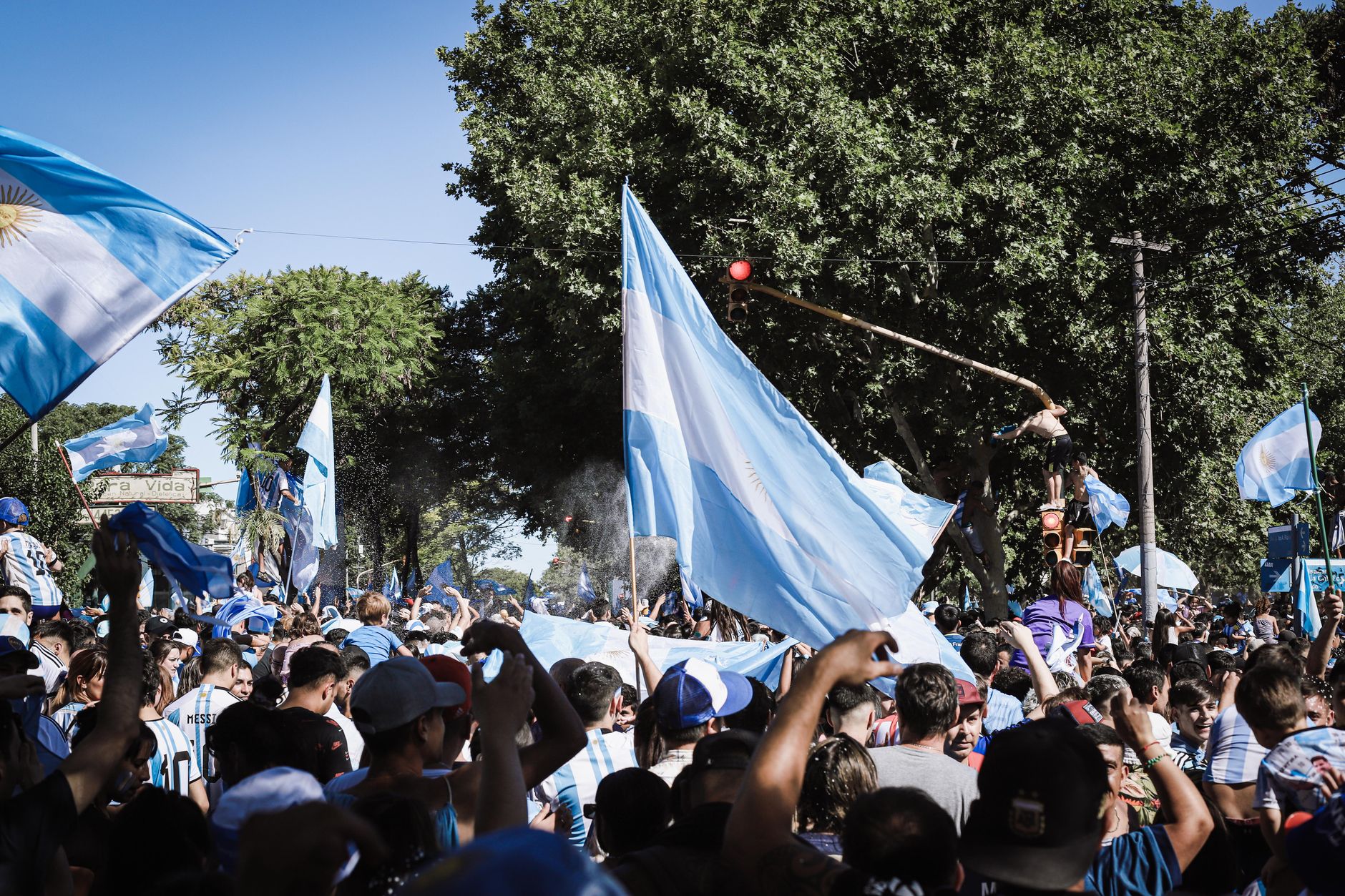
Photo by Gera Cejas on Pexels
The Top 3 World Cup Football Truths at a Glance
World Cup football rewards three analytical habits above all others: understanding the tournament structure, separating tactical quality from reputation, and measuring player impact with reliable statistics. These are not abstract principles; each can change how a supporter reads a fixture, and each becomes more important when 48 national teams compete across 16 host cities.
- The expanded format changes risk: The 2026 FIFA World Cup will feature 48 teams, 12 groups of four, and 104 matches, increasing the number of possible match scenarios.
- Tactics travel unevenly: A high press that works in a compact European stadium may lose efficiency after long-distance travel, heat exposure, or reduced recovery time.
- Player numbers need context: Goals, assists, progressive passes, pressures, and defensive actions become meaningful only when adjusted for minutes, opposition strength, and role.
The FIFA World Cup competition overview confirms the scale of the 2026 event, while the FIFA Laws of the Game provide the technical framework behind every match. Listen up — this is the part that matters: bigger does not automatically mean better football, but it does create more variables for serious analysis. A team can qualify from the group stage with a different points profile than supporters expect, and one poor defensive transition can matter more than 70 minutes of possession.
[Internal Link: 2026 World Cup format guide]
Want the tournament variables in one place before comparing teams?
#1 World Cup Format: Best Overall Analytical Advantage
The expanded 2026 format is the most important World Cup football development because 48 teams will compete in 104 matches across Canada, Mexico, and the United States. The tournament will begin with 12 groups of four, followed by a Round of 32, creating a longer route to the final than the 32-team format used from France 1998 through Qatar 2022. That means an analyst must separate group-stage qualification from championship quality; a team can progress without looking dominant, then improve rapidly in the knockout rounds.
The numbers create a useful edge for readers who normally focus only on famous nations. In a 32-team tournament, the standard group structure produced 64 total matches, whereas 2026 adds 40 fixtures, a 62.5% increase. The extra matches also create more data, but not necessarily cleaner data, because line-up rotation, qualification incentives, and late-game substitutions can distort averages. Brazil, Argentina, France, Germany, Spain, England, Mexico, Canada, and the United States will attract intense attention, yet their first objective is not to win every group match; it is to manage the route toward the Round of 32 without exhausting key players.
A less obvious edge case concerns match incentives. In a four-team group, the final round can produce simultaneous strategic behavior: one side may need a draw, another may require a victory, and goal difference may become decisive. Therefore, a team averaging 2.0 goals per match against weakened opponents should not automatically be rated above a team averaging 1.2 goals while facing stronger defensive blocks. Pitch Notes uses the competition calendar, likely qualification scenarios, and opponent quality to avoid treating every statistic as equally informative.

Photo by Nothing Ahead on Pexels
Why Does the 2026 World Cup Format Matter?
The 2026 World Cup format matters because 48 teams, 12 groups, 104 matches, and a Round of 32 create more qualification paths and more tactical uncertainty than the previous 32-team model. The tournament also spans Canada, Mexico, and the United States, so travel distance, climate, and recovery can influence performance before the knockout phase begins.
The format changes what “consistency” means. A national team may start slowly, secure four points, and still advance, while another may collect six points but suffer injuries that damage its later prospects. The 2026 host cities include venues in very different environments, from Vancouver and Seattle to Mexico City, Miami, Dallas, Atlanta, and New York/New Jersey. These are not interchangeable football laboratories: altitude, humidity, temperature, pitch conditions, and travel schedules can affect pressing intensity and substitution timing.
There is also a statistical trap that deserves more attention. Tournament averages often combine matches played in different strategic states, so a team’s possession rate may rise simply because it was protecting a lead against a weaker opponent. The better question is not “Who had more possession?” but “What did the team do during the first 15 minutes after losing the ball, and did its defensive shape survive the transition?” That minute-by-minute lens can reveal weaknesses hidden by a respectable final score.
According to UEFA technical reports, tournament football frequently turns on transition moments rather than possession totals alone. The lesson is almost old-fashioned, like watching a grainy World Cup replay late at night: the scoreline remembers the goal, but the match was often decided by the five seconds before it.
#2 Tactical Reading: Best for Match Predictions
Tactical reading is best for World Cup match predictions because formations alone do not explain how a team attacks, defends, or reacts after possession changes. A 4-3-3 used by Spain, Brazil, or England can represent entirely different pressing heights, full-back roles, midfield distances, and build-up patterns. The useful unit is not the formation printed on a television graphic; it is the behavior visible in each phase.
Consider three measurable questions:
- Build-up: Does the goalkeeper create a numerical advantage against the first pressing line, or does the team rely on long passes?
- Progression: Are midfielders receiving between lines, or are attacks moving almost entirely through wide areas?
- Rest defense: When full-backs advance, how many players remain positioned to stop a counterattack?
These questions are more predictive than reputation because they connect style to opponent. Argentina under Lionel Scaloni, for example, may control a match through patient circulation and selective pressing, while France can threaten with direct running and rapid transitions involving Kylian Mbappé. Neither approach is automatically superior. The relevant issue is whether the opposing centre-backs can defend space behind them, whether the midfield can resist pressure, and whether the match environment favors speed or controlled possession.
Here is a practitioner-level observation: press success can be overstated when analysts count only recovered balls. A team may recover possession high up the pitch but still concede a dangerous shot within 20 seconds because its rest defense is poorly positioned. Track the next action after the recovery, not just the recovery itself. That additional sequence—recovery, pass, shot or loss—often distinguishes sustainable pressing from theatrical pressing.
[Internal Link: advanced World Cup tactical analysis]
See how tactical patterns become clearer when possession, pressure, and transitions are measured together.
What Should You Measure Before a World Cup Football Match?
Before a World Cup football match, measure recent starting-lineup stability, expected goals, shot quality, high turnovers, set-piece performance, and the opponent’s defensive transition record. A minimum useful sample is five competitive matches, but each number should be separated by opponent strength, location, and game state.
A disciplined preview begins with the squad rather than the headline. Check whether a central midfielder is suspended, whether a full-back has played 90 minutes in consecutive matches, and whether the striker’s recent goals came from open play or penalties. These distinctions matter because one missing player can alter the entire geometry of a team. Germany’s ability to build through midfield, Portugal’s wide rotations, and the United States’ pressing structure each depend on role-specific relationships, not simply on the names in the starting XI.
Expected goals, usually abbreviated as xG, can help, but xG is not a universal truth machine. A penalty may carry a probability close to 0.76 or higher depending on the model, while a speculative shot from 25 metres may register below 0.05. Two teams with the same total xG can therefore arrive there through radically different chance profiles. One may create six close-range opportunities; the other may produce 18 low-value attempts.
Set pieces deserve separate attention because tournament matches are often tight. Review near-post routines, second-ball recoveries, goalkeeper command, and the number of fouls conceded around the penalty area. A team that generates 0.35 expected goals from corners per match against strong opponents may have a more repeatable advantage than a team inflated by three goals against a weak defensive unit. This is where prediction becomes analysis rather than decoration.
#3 Player Statistics: Best Value for Deeper Insight
Player statistics offer the best value for deeper World Cup insight because they reveal contributions that goals and assists miss. A midfielder can control tempo through progressive carries, a defender can prevent danger before a shot exists, and a forward can create space for teammates without recording a goal. The strongest evaluation combines event data with role, minutes, opposition, and tactical responsibility.
A useful player dashboard should include:
- Minutes played and starts, which reveal selection trust and workload.
- Non-penalty goals and expected goals, separating finishing from spot-kick volume.
- Progressive passes and carries, showing how often a player moves the ball toward danger.
- Pressures, pressure success, and recoveries, measuring defensive activity.
- Aerial duel rate and defensive errors, especially for centre-backs and target forwards.
- Shot-creating actions, which identify creators whose final pass is not always an assist.
Listen up — this is the part that matters: tournament value is often highest where public attention is lowest. A famous forward may dominate search results while a less celebrated holding midfielder determines whether the team can survive turnovers. For example, Rodri’s influence for Spain has historically involved positioning, circulation, and defensive control that cannot be reduced to goals. Likewise, a goalkeeper’s value may appear in post-shot expected goals prevented rather than save percentage alone.
The most useful information gain comes from adjusting player numbers to match state. A player making 12 pressures while his team trails 0–1 is not performing the same task as a player making 12 pressures while protecting a 2–0 lead. In a 30-match review sample, analysts should record whether actions occurred before or after the 60th minute, when substitutions and fatigue begin changing the tactical picture. This simple time split prevents the common mistake of treating all events as equal.
How We Ranked These World Cup Football Priorities
We ranked tournament format first, tactical reading second, and player statistics third using four criteria: predictive relevance at 35%, data reliability at 25%, practical usefulness at 25%, and distinctiveness at 15%. The format ranked highest because the 2026 World Cup changes the competition itself, while tactics and player data explain performance within that structure.
The scoring framework is intentionally transparent:
| Criterion | Weight | What We Check |
|---|---|---|
| Predictive relevance | 35% | Whether the factor changes match or tournament assessment |
| Data reliability | 25% | Sample size, source quality, and event definitions |
| Practical usefulness | 25% | Whether supporters can apply the insight before a match |
| Distinctiveness | 15% | Whether the point adds information beyond basic headlines |
Our evidence hierarchy begins with official FIFA competition information, national-team line-ups, match reports, and reputable event-data providers. The FIFA World Cup archive is useful for historical tournament records, while World Football Elo Ratings offers a comparative rating framework that can supplement—but should not replace—match-specific analysis. Ratings are backward-looking summaries; they do not know that a winger is carrying a minor injury or that a coach has changed the pressing trigger.
A practical edge case appears when a team changes coach within six months of the tournament. Historical data may still describe the previous manager’s style, producing a false sense of continuity. In that situation, weight recent friendlies carefully, but do not treat them as equal to competitive matches. Track starting-lineup selection, defensive spacing, and substitution behavior across at least three games before declaring the new tactical identity stable.
The final ranking is therefore not a prediction of which country will win the trophy. It is a ranking of the most useful analytical lenses for following World Cup football without surrendering judgment to fame, nostalgia, or a single impressive scoreline.
[Internal Link: World Cup player statistics guide]
Get a more disciplined framework for comparing players, teams, and match conditions.
Which World Cup Football Approach Should You Pick?
Choose the tournament-format approach if you want to understand qualification paths, travel, scheduling, and knockout risk; choose tactical reading if you want to preview individual matches; choose player statistics if you want to identify hidden strengths and weaknesses. For the most reliable view, combine all three rather than treating any one category as a complete answer.
Here is the decision map:
- Following a host nation: Start with venue, travel, climate, and home-support effects, then examine line-up stability.
- Comparing traditional powers: Start with tactical matchups, especially pressing resistance and defensive transitions.
- Evaluating an emerging team: Start with player roles, set pieces, and opponent-adjusted chance creation.
- Studying a potential upset: Check whether the underdog can defend its penalty area and attack the space behind advanced full-backs.
- Reviewing a prediction: Ask whether the conclusion depends on one player, one recent result, or a stable multi-match pattern.
The contrarian conclusion is that “best team” and “best tournament profile” are not identical. A side with superior individual talent may be vulnerable to travel, midfield injuries, or a poor match-up against low blocks. Conversely, a compact team with fewer stars may survive because its defensive distances remain stable and its set pieces create repeatable chances.
Pitch Notes is designed for that level of coverage, combining match predictions, team tactics, player statistics, and daily 2026 World Cup updates. Any prediction should remain an informed estimate, not a guarantee, and responsible readers should never stake money they cannot afford to lose. If gambling content is relevant to your research, verify local laws, age requirements, and operator licensing before taking any action.
Why Does Context Beat Reputation in World Cup Football?
Context beats reputation because World Cup matches are shaped by specific opponents, venues, line-ups, and tactical incentives rather than historical status alone. Brazil’s five titles, Germany’s four, Italy’s four, and Argentina’s three provide important history, but they do not guarantee superiority in a single 90-minute match.
A reputation-based preview usually stops at rankings and famous names. A context-based preview asks whether the midfield can progress against a narrow 4-4-2, whether the centre-backs can defend wide channels, and whether the coach has enough bench options after the 70th minute. These questions become sharper in 2026 because the United States, Canada, and Mexico will host matches across a geographically vast tournament footprint.
History still matters, but it must be used correctly. The FIFA World Cup records page shows how titles, appearances, and goals accumulate over decades; it does not claim that past champions possess a permanent competitive advantage. As one FIFA competition principle puts it, “every match is a new story.” The wording is simple, but the data supports it: tactical systems, player generations, coaching staffs, and tournament formats change continuously.
For readers keeping a private prediction sheet, record the reasoning before kickoff and review it afterward. Note expected line-up, match-up assumption, key uncertainty, and confidence level from 1 to 5. After 10 matches, patterns emerge: perhaps injuries were underweighted, or perhaps possession was given too much importance. That feedback loop is more valuable than pretending every prediction was obvious in advance.
Frequently Asked Questions
Q: What is World Cup football?
A: World Cup football is the men’s international tournament organized by FIFA to determine the world champion, with national teams qualifying through regional competitions. The 2026 FIFA World Cup will feature 48 teams across Canada, Mexico, and the United States, expanding the event from the 32-team format used through 2022. The competition will include 104 matches and a Round of 32 before the later knockout rounds.
Q: How do you analyze a 2026 World Cup match?
A: Analyze a 2026 World Cup match by checking the expected line-ups, recent opponent-adjusted form, tactical match-up, venue conditions, and set-piece record. Begin with the last five competitive matches, then separate open-play chances from penalties and examine how each team responds after losing possession. Finally, reassess the conclusion when official line-ups are announced, usually because one absent midfielder or full-back can change the entire structure.
Q: What is the difference between World Cup team rankings and tactical analysis?
A: World Cup team rankings summarize broad historical or recent strength, while tactical analysis explains how two specific teams may interact in one match. A highly rated team can struggle against a compact defensive block, an aggressive press, or attacks into the space behind its full-backs. Rankings are useful for establishing a baseline, but tactical match-ups, injuries, travel, and game state provide the more immediate explanation.
Q: Why do World Cup predictions fail?
A: World Cup predictions fail because analysts often overvalue reputation, use small samples, ignore line-up changes, or treat possession as a direct measure of control. Tournament matches also contain low-frequency events such as penalties, red cards, deflections, and goalkeeper errors that can overturn a sound pre-match assessment. To reduce errors, record confidence levels, separate process quality from the final result, and review at least 10 predictions rather than judging one match.
Q: How many teams will play in the 2026 World Cup?
A: Forty-eight teams will play in the 2026 FIFA World Cup, compared with 32 teams in Qatar 2022. The teams will be arranged into 12 groups of four, with the group-stage schedule followed by a Round of 32. Canada, Mexico, and the United States are the co-hosts, and the tournament will be distributed across 16 host cities.
Q: Is World Cup football analysis free?
A: Basic World Cup football analysis can be produced freely from official FIFA match information, public results, line-ups, and reputable statistical sources. More advanced data platforms may charge for event-level information such as pressures, progressive actions, expected goals, and tracking data. Pitch Notes provides daily tournament-focused coverage, but readers should compare sources and check definitions before treating any statistic as definitive.
Q: What should I do if a World Cup prediction conflicts with the latest team news?
A: Reassess the prediction immediately when late team news changes a goalkeeper, centre-back, holding midfielder, or primary striker. Compare the replacement’s role with the starter’s role, then consider whether the coach will alter the formation, pressing height, or build-up method. If the uncertainty remains high, lower your confidence instead of forcing a precise conclusion, and never treat an uncertain prediction as guaranteed.
The best World Cup football analysis begins with a quiet refusal to accept easy answers. In 2026, the numbers are larger, the travel is longer, and the tournament contains more routes to both progress and collapse. Start with the format, test the tactical match-up, verify the player data, and let the evidence remain stronger than the name printed on the shirt.
[Internal Link: World Cup FAQ and tournament coverage]
Ready to follow the 2026 tournament with sharper data and clearer match context?
End of Article · Pitch Notes